
 Events
  Resources
  News
News News
Read our latest news, stories and articles
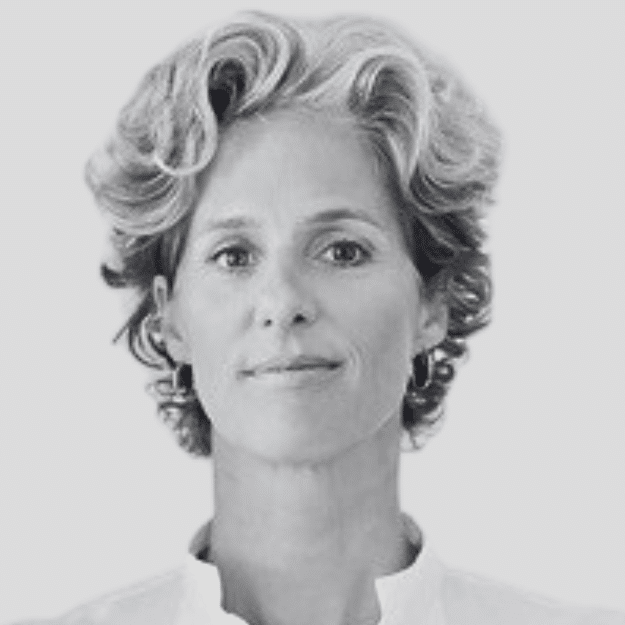
Swiss Arbitration Interview Series: Corina Bölsterli, President of the Advisory Council for Mediation of the Swiss Arbitration Centre
Denise Jnr. Cartier, Cartier Mediation & The Barrister Group
What was your career path before becoming a mediator?
After completing my law degree at the University of Zurich, I moved to New York, where I worked for several years at a Wall Street law firm. I earned an LL.M. from NYU, passed the New York Bar Exam, and practised as an attorney. My focus was on corporate law, particularly investment management, alternative investments, private wealth, and corporate governance. Returning to Europe, I joined a law firm in Liechtenstein, where I concentrated on foundation, trust, and estate law.
What led you to pursue a career as a mediator?
After gaining litigation experience as an attorney, I began to question whether adversarial proceedings were always the best option for clients. I observed that clients had a strong, trust-based relationship with their attorney, who in turn could either engage in adversarial procedures or, what I considered (and still consider) attractive, in alternative dispute resolution (ADR), including mediation. I researched and examined ADR methods and was impressed by their efficiency and efficacy. Consequently, I was determined to become a professional mediator.
For the benefit of those who have never been in a mediation, could you describe what a mediator does during a mediation?
I think of mediation as a structured and confidential negotiation facilitation process, supported by an independent third-party expert. In commercial disputes, we often use what we call “shuttle mediation”. After a short joint introduction, the parties work in separate rooms with the mediator, who supports both parties and “shuttles” between them. Sessions typically last a full day, with the aim of reaching a resolution or at least a partial resolution. This allows for focus, momentum, and a better chance of reaching a mutually agreed-upon out-of-court settlement. A full-day mediation can be structured into different phases. For example:
- Preparation – Before the mediation day, the mediator meets with each party privately to explain the process and prepare them for the day.
- Opening statements – At the start of the mediation day, each party presents their perspective and main concerns. The mediator encourages dialogue, identifies issues, and helps set the agenda.
- Exploration – Subsequently, private sessions (caucuses) where the mediator meets each side separately. These allow parties to explore their interests and priorities and to develop viable solutions to resolve their conflict.
- Negotiation and resolution – The mediator facilitates discussions, supports the parties to overcome potential deadlocks and works toward possible agreements. If a solution is reached, the mediator helps the parties to draft a settlement agreement.
The mediator’s role throughout is to guide and manage the process. We remain neutral and independent at all times. We structure the day, ensure everyone is heard, clarify misunderstandings, test assumptions, explore risks and best alternatives to negotiated agreements (BATNA), and support the negotiation of workable options. In short, we focus on creating the right conditions for the parties to reach their own solution, providing a facilitative approach, rather than evaluating the case or deciding the outcome for them.
The parties themselves are central to the process. It is their dispute, and their decision whether and on what terms to settle. Mediation works best when parties engage openly, focus on their underlying interests and commercial priorities, and are willing to explore flexible solutions.
Attorneys play an important role and become part of the mediation process: They advise their clients on legal strengths and risks, help evaluate proposals, and ensure that any settlement is properly documented and enforceable. Mediation tends to be most effective when both lawyers and clients approach the day collaboratively and solution-focused, rather than adversarial.
What do you find are the most interesting or exciting parts of being a mediator?
It is the ability to encourage communication between the parties and to help them develop different perspectives, enabling them to find tailor-made solutions that lead to out-of-court settlements. It is very rewarding when mediation safeguards the potential for future relationships and protects clients´ reputations and business relationships. Working with emotions and understanding cultural dynamics also makes the process fascinating and meaningful.
What challenges do mediators typically face during a case?
There are quite a few, but in general, they are:
- Building a rapport with the parties and maintaining it throughout the mediation process;
- Staying neutral and independent, in terms of what you say and how you act;
- Staying flexible throughout the process and adapting to each unique case as it progresses; and
- Not giving your personal opinion or leading the parties to a solution that they have not crafted themselves.
In general, what is being done to encourage the use of mediation as an alternative dispute resolution?
Mediation can be used on its own as an alternative dispute resolution method, or combined with other ADR processes. It is not an either/or choice, but can complement and strengthen arbitration, for example. However, this collaborative potential is not yet fully reflected in legal practice. To make the most of mediation, attorneys need to become more familiar with its procedures and learn how to effectively represent their clients in this context. Training in mediation advocacy and in the use of commercial mediation, including hybrid models such as Med-Arb-Med, is therefore fundamental to encouraging its broader adoption.
Last year, you became President of the Swiss Arbitration Centre’s Advisory Council for Mediation. Can you explain what the Advisory Council for Mediation does?
The Advisory Council for Mediation (“the Council”) is a body of experienced international mediation practitioners that provides guidance to and supports the Swiss Arbitration Centre in administering mediations under the Swiss Rules of Mediation. This includes appointing qualified mediators for administered cases, advising on procedural matters, helping ensure the quality and consistency of mediation services, and offering expertise in complex cases.
Beyond this, the Council also has a broader mission to promote and strengthen the practice of commercial mediation in Switzerland. This includes mediations under the Swiss Rules as well as ad hoc mediations. To achieve this, the Council develops initiatives and projects to enhance the Centre’s services, raise awareness of the benefits of mediation, and increase recognition of the Centre’s mediation offerings among practitioners and the wider business community.
What projects is the Advisory Council for Mediation currently working on?
We are actually working on quite a few projects, namely:
- An efficient nomination service for ad hoc mediations.
- The revision of the Centre’s Model Mediation Clauses.
- A marketing campaign with respect to promoting the use of commercial mediation.
- Creating new partnerships to strengthen our ties with chambers of commerce, thereby creating awareness of mediation.
You are also a board member of the Swiss Chamber of Commercial Mediation (SCCM), which is ASA’s partner. In light of this, how have you seen mediation evolve in Switzerland over the past 10-15 years?
The Swiss mediation market is not covered by any representative statistic (yet), so it is hard to answer your question based on numbers. In the UK, for example, the Centre for Effective Dispute Resolution (CEDR) in London provides an annual mediation audit. According to the 2025 audit, the UK commercial mediation case number exceeded 21,000 in 2024, a 24% increase on the reported 17,000 cases in 2022 and more than double the number just ten years before. Switzerland lags significantly behind the UK market; we observe fewer commercial mediation cases. I am glad to say, however, that mediation in Switzerland has evolved significantly over the past 10–15 years. We have seen a clear increase in the number of cases being mediated, with SCCM-accredited mediators reporting higher caseloads. In 2025, SCCM alone counted 219 accredited mediators, each of them managing several mediation cases per year. Simultaneously, more international mediators are seeking Swiss certification, reflecting Switzerland’s growing reputation in ADR.
The SCCM has also expanded its activities, offering more events for members and non-members alike, and supporting the growth of regional and practice-focused mediation groups. In terms of regional differences, more mediations take place in the French-speaking part of Switzerland than in the German-speaking regions, due in part to cultural factors and cantonal legislation.
Finally, institutional support for mediation has strengthened, notably through the establishment of the “Bureau de la médiation” in the Canton of Geneva, which alone handled over 830 mediation cases in 2025. Overall, the trend in mediation in Switzerland is positive: it is more widely used, better supported, and increasingly recognised as an effective dispute-resolution method.
Mediation is increasingly used before or during arbitrations. Why is this the case?
This is true. We are noticing an increasing number of mixed-mode disputes – disputes where mediation and arbitration are combined. These hybrid models have become increasingly common in both commercial and family wealth contexts. Examples of mixed-mode disputes include:
- Med-Arb: mediation first, with arbitration only if needed;
- Med//Arb: mediation and arbitration running in parallel; and
- MEDALOA: a neutral who first facilitates settlement, then, under strict safeguards, they may become a decision-maker.
These approaches enable parties to address both “hard” issues (e.g., legal rights, valuations, fiduciary responsibilities) and “soft” issues (e.g., mistrust, communication breakdowns, differing long-term goals).
What are the benefits of using mediation before or during a legal dispute as opposed to, for example, negotiation or conciliation?
There are quite a few to pick from, so I will limit this to three:
- Private, non-public dialogue: Mediation takes place in a collaborative but strictly confidential setting. This dialogue is strictly without prejudice, i.e., parties can exchange facts, opinions and options to resolve conflicts without being exposed to public scrutiny or a judge. This reduces the risk for both sides and encourages openness from the parties.
- Neutral third-party guidance: Mediation provides an impartial mediator who actively facilitates the conversation. Unlike negotiation (where parties advocate primarily for themselves) or conciliation (which is often more focused on legal advisory aspects), mediation ensures balanced dialogue and prevents conflicts, deadlocks or the domination of one party over the other. Mediation focuses on aspects that are typically of second- or third-order importance, if at all, in negotiation or conciliation, while they are of first-order importance in mediation.
- Flexibility and creativity: Mediation allows for solutions beyond what legal procedures or strict negotiations might offer. Mediators help parties explore creative options that a court or traditional negotiation often does not consider.
How can a person or entity ensure that mediation takes place before or during an arbitration?
Mediation is a non-compulsory process. At first glance, any party involved in a conflict can benefit from the advantages of mediation, independently of legal procedures. However, it is important to include a mediation clause or a multi-tier clause in any contracts to increase the likelihood of a mediation taking place. Such clauses can provide for the Swiss Arbitration Centre to administer the potential mediation.
What can lawyers and clients do to make the most of a mediation? Any dos and don’ts?
Some Dos would be:
- Prepare well for a mediation and use the (out-of-the-box) opportunities mediation offers.
- See it as a chance to re-establish communication between the parties, to move parties off deadlock and to focus on collaboration and a potential future relationship, rather than conflict.
- Empower the client in the mediation: provide support but respect the client’s autonomy.
- Trust in negotiation tools that are independent of purely legal and rational argumentation, as they usually fail to convince the other side in a mediation.
The only “don´t” is to “not try mediation”. Parties can only win when participating in mediation, as they control the process and retain authority over whether to make or break a mediated agreement, i.e., an out-of-court settlement.
Critics sometimes suggest mediation is just an extra layer of cost and time. How do you respond to practitioners who believe arbitration is already “efficient enough”?
Mediation often focuses on matters that are not purely legal. Thus, it can complement arbitration and often, re-establish communication between parties, break deadlocks, or create (partial) solutions that are not primarily driven by legal considerations. When implemented professionally, mediation is fast, proportionate, and cost-effective. Contentious points can often be resolved through mediation before or even during arbitration, and the parties save a lot, both monetarily and reputation-wise. Mediation often offers parties a dignified way out of the conflict zone, which is priceless!
Thank you very much, Corina, for taking the time to answer our questions.